Sunday, 17 June 2012

Sir Robert de Umfraville


Sir Robert de Umfraville KG, c. 1363 - 27 Jan 1436

Governor of Roxborough castle 1399
Knight of the Garter 1399
Vice Admiral of England 1410 – 1436
Lord of Redesdale 1421 – 1436
Lord of Kyme 1421 – 1436

Son of Thomas de Umfraville, lord of Redesdale and grandson of Robert de Umfraville, earl of Angus, Robert is perhaps the most famous of all the Umfravilles and certainly one of the most vigorous.  His brother, Sir Thomas fought at Otterburn. Sykes claims that Robert was appointed Vice-Admiral of England by Richard II (1377 -1399), but Hedley believes he attained this position in 1410 and seems to have kept the title for the rest of his life.


In 1399 Robert was made keeper of Roxburgh castle and created a Knight of the Garter after routing a Scottish raid near Fullhope Law. In 1400, Robert smashed a raiding party of 500 Scots who had come to raid, some 200 of whom were slain outright. Hedley says that on his appointment as Vice Admiral, Robert was given command of 10 ships with which he landed troops and plundered the Firth of Forth for 14 days. Also in 1410 he had sacked Peebles and burned down the market town in the company of his 18 year-old nephew Gilbert. In 1414 he was made receiver of customs at Berwick for life and given Warkworth castle as part of the attainder against the Duke of Northumberland.
Robert fought at the battle of Yeavering on 22 Jul 1415 before sailing to France to join Henry V at the siege of Harfleur. He, of course, took part in the battle of Agincourt - perhaps fighting alongside Gilbert with the vanguard and then right hand battle.


Robert would have inherited Redesdale and Kyme on the death of Gilbert at the battle of Baugé in 1421. Robert was the last of his line to hold Otterburn hall and the last Umfraville Lord of Redesdale. Elsdon Pele tower (which dates from the late 14th century) bears the Umfraville coat of arms and the inscription 'R. Dominus de REDE'. The 'R' probably stands for Robert.

Hedley, W. Percy, Northumberland Families, Vol. I (Newcastle, 1968).
Sykes, J., Northumberland and Durham Local Records, Vol. I (Newcastle, 1833).

Wednesday, 13 June 2012

Some bits and bobs


In between finishing off the Lancastrian HYW army, I'm working through some other bits and bobs from the 'pending shelf'.

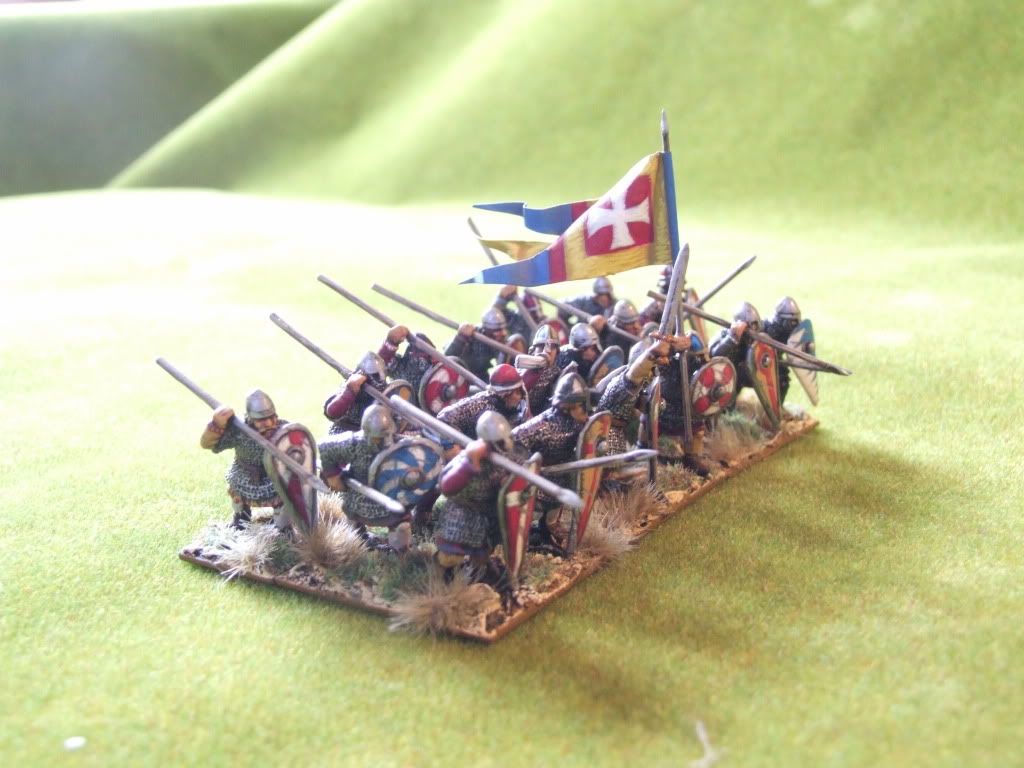
This weekend it was some crossbowmen for my Third Crusade army in the colours of the Lusignans.


and a musician and man-at-arms for the Valois HYW army. Hopefully by squeezing these in between the English, I'll have the French finished off this year summer as well.


I also had a splurge of basing, undercoating and lining up the next several months worth of figures. Here's a glimpse of something for later. You never know James, I might even finish off the Sammies!


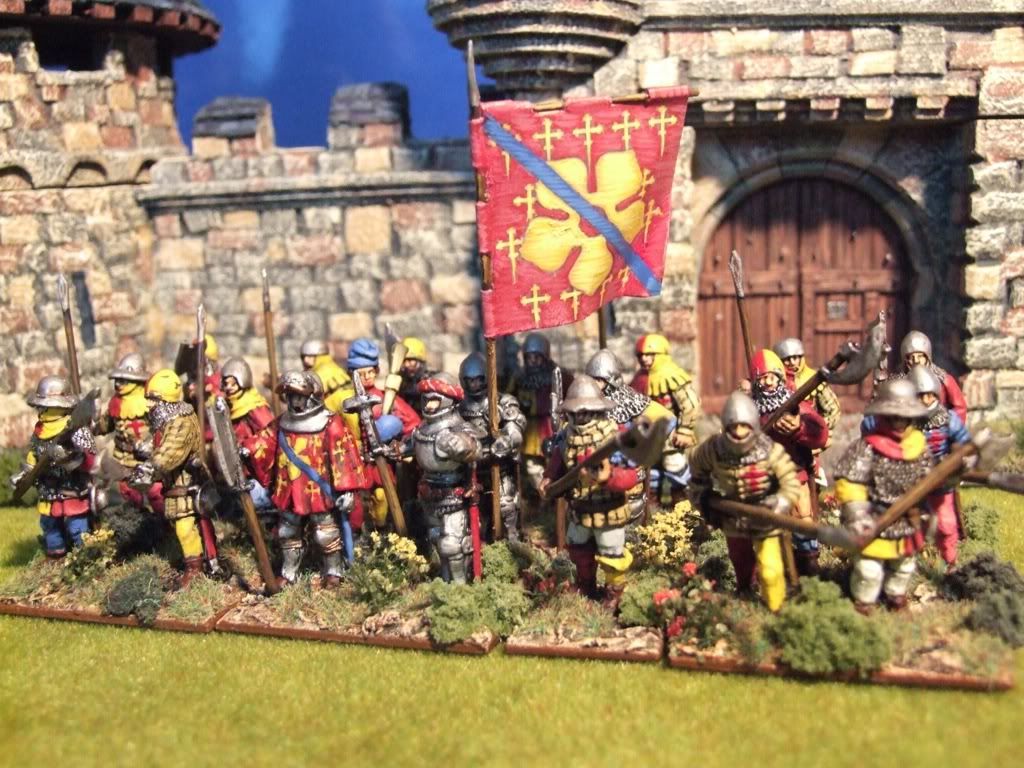
As another taster, the Umfraville foot are now done and I'll get some photos done later in the week.

Friday, 25 May 2012

Men-at-Arms and stuff

Having found some batteries for the old camera, here are the results of last weekend's work.

First up are some pavises. I did twelve in total for a unit of crossbowmen in the service of Marshal Boucicault c.1414. I bought these pavises long from Front Rank long before the twins had produced the Mercenary box set.


Next up are a couple of men-at arms to finish off a unit of English foot for the same period. I'd originally planned on an eighteen strong unit, but with the new AoA lists and spare figures (one of which was already painted), I took the unit to 21.

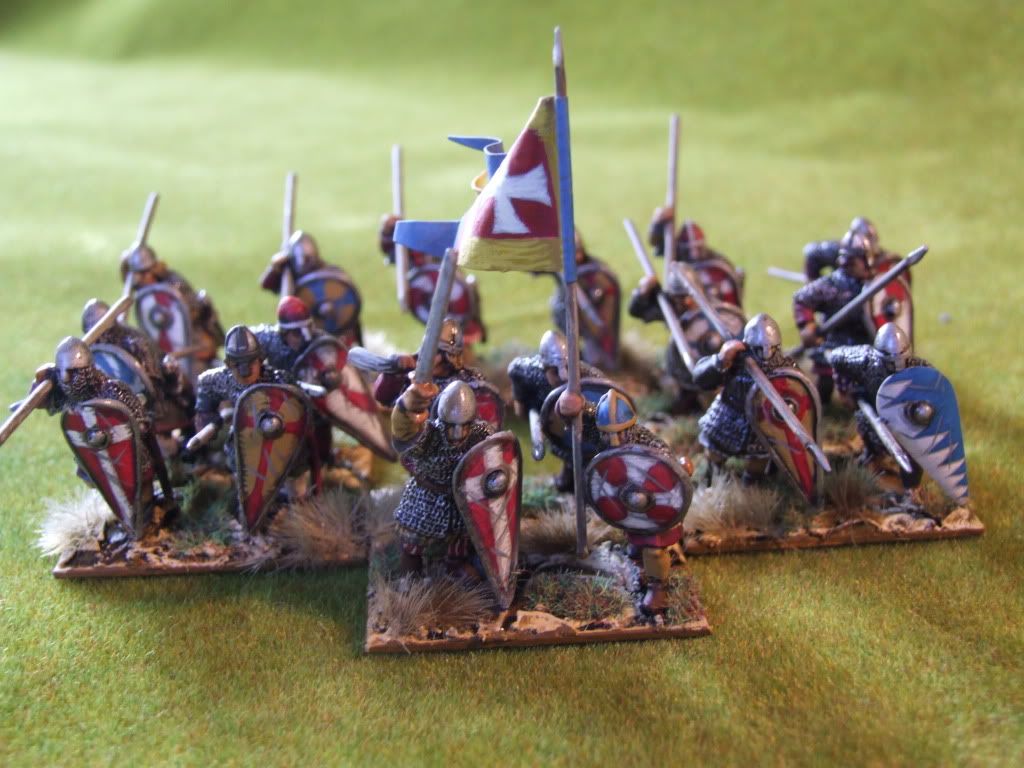
Next some more men-at-arms. This time for a new 21-man unit in the livery of Sir Robert Umfraville. there will be more on Sir Robert in my next post when you will see the unit in all its glory! So this is just a taster:

Monday, 30 April 2012

archers 2!

Finished despite an attempt by some nasty bug to bed me down for the last couple of days:


Along with Gilbert de Umfraville, Sir John Cornwall KG (aka Cornewaille, Cornwayl and Cornouayl) was one of the veteran commanders Henry V trusted with his advance guard and was also one of the most respected chivalric figures of his era. He served King Richard II in Scotland, fought for the Duke of Lancaster in Brittany, as well as for King Henry IV against Owain Glyndŵr during the Welsh Uprising. Henry IV made Sir John Cornewaille a Knight of the Garter in 1409. At the battle of Agincourt, Sir John captured Ghillebert de Lannoy, and Louis de Bourbon, Count of Vendôme, whom he ransomed for large sums for money.


Sir Thomas Wenlock was the only knight to be listed on Sir John's indenture for the 1415 campaign and here he is seen leading his lord's archers. Sir Thomas was a long term member of Sir John's military household and can also be found in the indenture for the 1421 campaign


and ouch, just noticed that I got some of his lip colour on the gorget - since sorted  ;)

Thursday, 26 April 2012

Archers!

Task 2 on the Guild group build is a unit of 16 seasoned archers to join Sir John Cornwall's retinue. The deadline is Monday evening - plenty of time [ahem].


All under the dutiful eye of Sir John's trusted subordinate, Sir Thomas Wenlock - now where's hie heraldry gone. I know it's around here somewhere...

Monday, 23 April 2012

The Evidence...

Looking a little battered curtusy of the baggage handlers at London (yeah right!) Stansted and on James Sharpe's gorgeous terrain, we have the Honda clan:


Based for either WAB or Hail Caesar each unit was meant to have five bases of four. The clear plastic movement trays are also by James - and available here:

http://www.oshiromodelterrain.co.uk/index.html

However, as can be seen, the last four dismounted Samurai weren't not quite ready in time:


and from the front. On reflection, the red on yellow sashimono is a little distracting. So I will tone it down a bit in due course.


Ashigaru with yari (another of these to finish off):


Ashigari with bow:


with arquebus:


back of the clan leader - Honda Tadakatsu with standard bearer:


Close up:


and the opposition - from James' collection:


and twelve mounted Samurai to go...

Saturday, 14 April 2012

Samurai...

Now, some of you may have been aware that I stupidly volunteered to be diverted from western medieval goodness to some blokes in flouncy shirts with banana swords - c.1600 to make things worse.

In support of James' annual Oshiro demonstration game at Salute, I've been putting together a Honda force from Perry sculpts - who else ;-)

The original plan of 80 Ashigari (four units of 20), 20 dismounted Samurai, 12 mounted Samurai, a command stand and various casualties, has dwindled through work commitments etc. (and the odd distraction onto proper medieval loveliness) to 60 Ashigari (three units of 20), 16 dismounted Samurai and a command stand (although the final stand of four sammies might still make it off the painting tray in time!)

So I'm down to finsihing the last few minis and the command stand (a conversion of the Perry Tadakatsu sculpt to put him on a horse on a base with his standard bearer) - all looking good to be finished tomorrow. All the rest are mounted on their bases with sand in place ready for an ink wash and some static grass before varnishing.

But no photos until after Salute - booo, hiss!

I know, totally unfair, but I need to use every last minute to finish painting, basing and varnishing the damn things before flying off to UK on Tuesday. Besides, they'll look so much nicer on James' beautiful terrain then on my desk.

So - watch this space for some photos a week Monday...

Sunday, 26 February 2012

Gilbert de Umfraville's scurriers - in a oner!

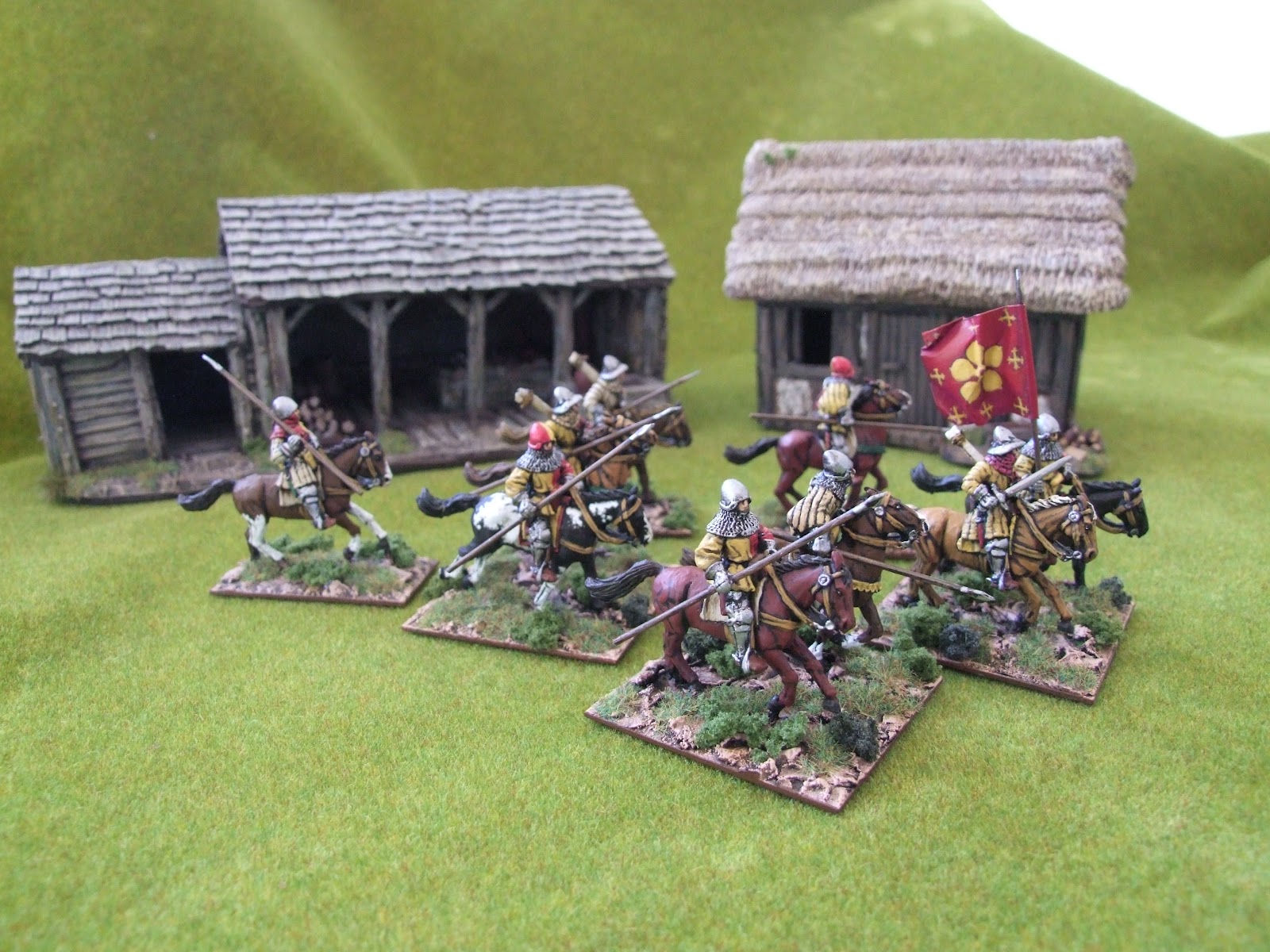
A small unit of nine light horse with full command. Given that my army is based on the Advance Guard from the march to Calais in 1415, I went for Gilbert de Umfraville's livery (to match a unit of dismounted archers under the good 'earl of Kyme' himself).
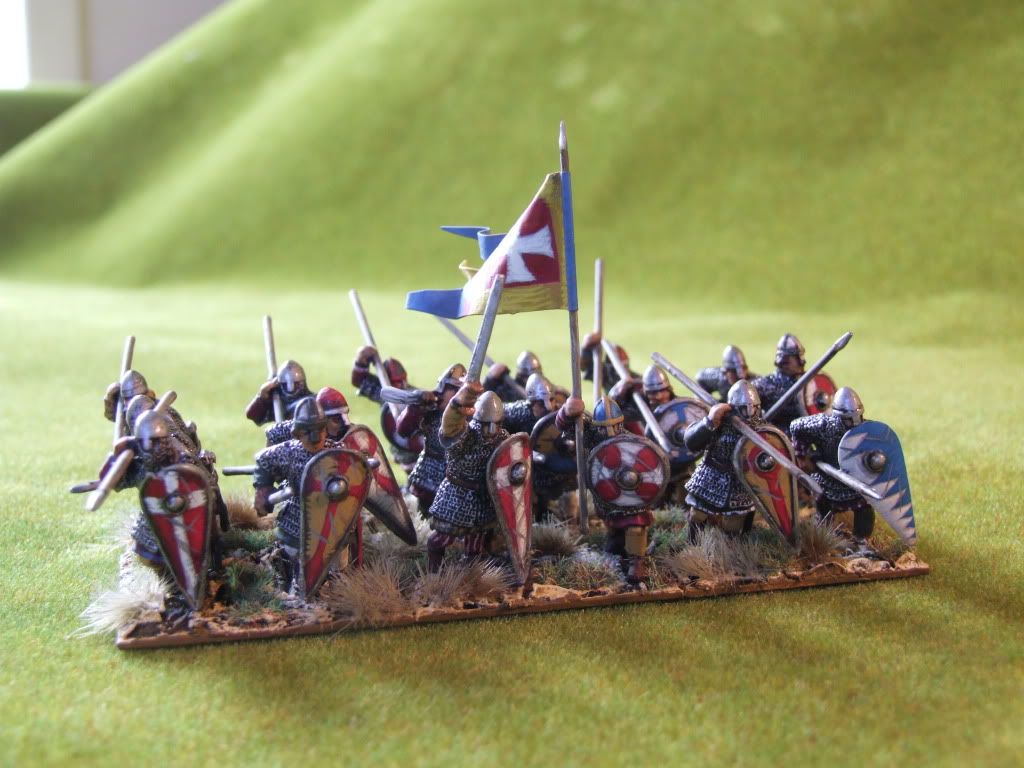


One figure type was scupted with a crossbow windless. So that obviously had to go and has been replaced by a longbow - well some brass rod wrapped in paper. Gilbert is listed as having 20 men-at-arms and 90 horsed archers at the start of the campaign. Now arguably this definition was possibly driven by how much they were paid and, as no mounted scouts are listed, I think it's reasonable to argue that some of those mounted archers were actually hobilars or scurriers - especially given some of the Umfraville family estates were up on the Scots borders.
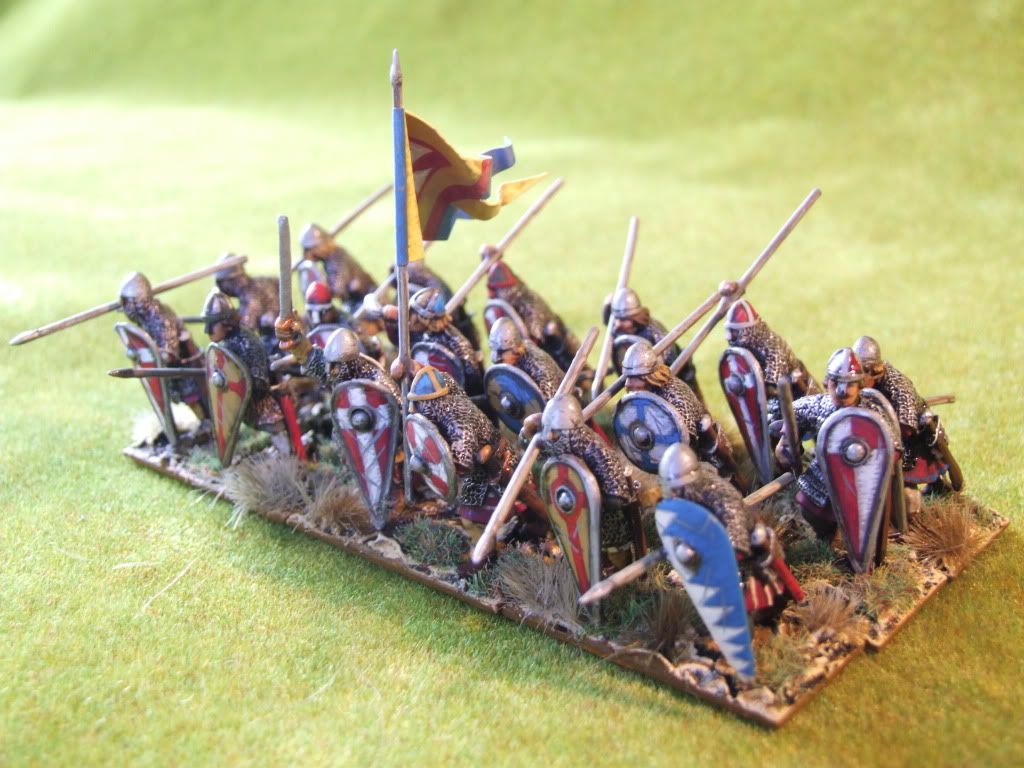


These may well also be facing some of the lovely new Claymore Castings' Scots in due course  ;)

The buildings in the background are from the Grand Manner Dark Ages range, but are fine for rural France c. 1415.

Last of the pricklers

Well, finished off last weekend, but I only got around to taking the phots this am. Command base:


Saturday, 11 February 2012

Next Batch

Four more light horse - only the command team left the crack then it's onto the varnishing:


Friday, 10 February 2012

Those Long Winter Knights

Despite the endless line of Sammies facing me across the painting table heading for James' demonstration game at Salute in April, I decided to find space to finish off the HYW English Army.

First up are a small unit of nine light horse with full command. Given that my army is based on the Advance Guard from the march to Calais in 1415, I went for Gilbert de Umfraville's livery (to match a unit of dismounted archers under the good 'earl of Kyme' himself).

One figure is scupted with a crossbow windless. So that obviously had to go and has been replaced by a longbow - well some brass rod wrapped in paper. Gilbert is listed as having 20 men-at-arms and 90 horsed archers at the start of the campaign. Now arguably this definition was possibly driven by how much they were paid and, as no mounted scouts are listed, I think it's reasonable to argue that some of those mounted archers were actually hobilars or scurriers - especially given some of the Umfraville family estates were up on the Scots borders.


Three down and six to go...

Sunday, 27 November 2011

.. and the rest

With the standard completed I can now show the finished unit in all its glory:

Ten knights of Richard I’s household in Palestine c. 1191. Following-on from the information given on the heraldry of the royal liveried knight/serjeant and Roger de Harcourt, the unit is led by Stephen of Thornham (Turnham), royal marshal and brother to Robert, justiciar of the royal fleet and, then Cyprus. Due to Howden’s translation of his name into Latin (Stephanus de Toronis) being the same as Stephen de Tours, royal steward and former seneschal of Anjou, there has been some confusion as to whether they were one and the same chap. By studying witness lists in various charters, it can be established that they were clearly two separate characters – both of whom were with Richard in the Holy Land. I've taken a different approach to Stephen's caparison and inserted the same heraldry as the shield on a blue background - this is to compliment the heraldry I had chosen for Richard's household, which can be seen on the musician behind him (such as might be expected by a senior official of the royal household).

The standard is carried by Peter des Préaux, who is described as replacing Robert Trussebot for that task. To his right is his eldest brother John, lord of Préaux, and to his rear another brother and also a royal steward, Roger. As steward, Roger is keeping close eye on the trumpeter to ensure he follows the direction of the marshal. All three bear the heraldry of the des Préaux family - a gold eagle on a red background. A fourth brother, William des Préaux, gave himself up to the Muslims during a skirmish in September 1191 to allow the king to escape. One of Richard’s last acts in Palestine was to buy William’s freedom. The final brother, Engleraw, remained in the West as part of Prince John’s household. Finally, to the rear right is Gilbert Talbot, who was rewarded with the custodianship of the royal castle of Ludlow following his service with Richard in the Levant.

Andrew de Chauvigny


Andrew de Chauvigny, cousin to Richard I and overseer of the regulations for the Third Crusade written in Messina in October 1190. He was given the hand of Denise, countess of Devon, daughter and heiress of Ralph VII de Deols by Richard I and married by bishop of Rochester in August 1189.


Andrew wasn’t the luckiest of chaps, he was unhorsed by William Marshall and severely broke his arm when Henry II's rearguard clashed with Count Richard's vanguard outside Le Mans in 1189. Then he broke it again whilst rescuing the earl of Leicester in Palestine in December 1191. However, he was certainly brave. His standard was one of the first raised above the walls of Darum during King Richard I's assault (22 May 1192) and he participated in repulse of Mamluk counter attack at Jaffa - one of only 10 with a horse (August 1192). Finally, in terms of the Third Crusade, he was the commander of first party of pilgrims to Jerusalem.

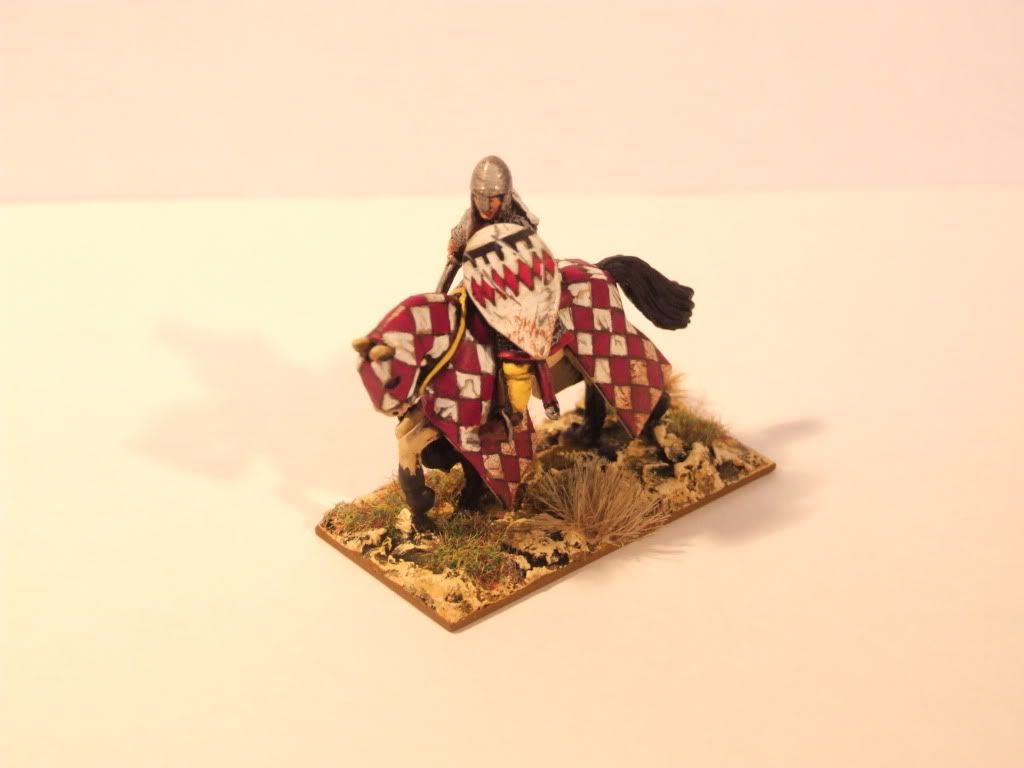
Rather than replicate the arms of his shield on the caparison, I have chosen to just use the red diamond symbol, which would be easy to distinguish on the battlefield and in line with representations of other caparisons from the period.

Monday, 14 November 2011

Nearly Done

Still some tufts to add to the bases and gloss varnish for the armour:

Richard I


Richard's arms are based on his first royal seal showing the two lions of the duchies of Normandy and Poitou, which changed to the more familiar three lions (the third probably representing Aquitaine) towards the end of his reign and after his return form crusade.

Roger de Harcourt, household knight and companion to Richard I, and a royal serjeant


Roger wears the family heraldry (at this time heraldry was more a family than individual thing) and the serjeant carries a shield bearing a white cross (as agreed in Jan 1189 with King Philip II and the count of Flanders) superimposed with Richard's probable royal arms (see above).

Wednesday, 31 August 2011

Fancy some Danish?


Next batch of crusaders:


Again these are from Perry Minis 28mm First Crusade range and represent a unit of Danish crusaders c. 1189. About 2,000 Danes and Frisians beached their fleet at Acre and marched almost immediately into battle under James de Avesnes – a hero of the tournament circuit who they had elected as their commander.


The unit commander, his standard bearer, hornblower and bodyguard (on the central stand of four figures) wear the colours of the royal house of Estridsen (Blue and Yellow). Although King Canute VI wasn’t on the Third Crusade, the size of the contingent and the lack of detail on Danish noble participation, led me to assume at least one knight of the royal household would have gone along.


The standard includes the Dannebrog (national flag of Denmark) on a field of Estridsen colours. Popular history tells of the Danneborg falling from the heavens during either during the battle of Lyndanisse (1219) or Fellin (1208), but it only appears in historical narratives of the 16th Century and some have suggested that it came from the strong Hospitaller presence in Denmark. However, a Danish crusader historian has suggested (over a few glasses of Carlsberg!) that the Dannebrog was based on a Papal banner given by Eugenius III at the time of the Second Crusade for the campaign against the Wends. So here it is – on the Third Crusade, but not yet in its modern form with similar schemes repeated on several shields. Flag and shields handed painted as usual.


Some titillation for the next batch (with a huge thanks to Soapy for doing the conversion work):

King Richard the Lionheart


and a couple of his household knights


Sunday, 26 June 2011

Hospitallers...


The Order of Hospitallers was founded in the 11th century and recognized by Pope Paschal II in 1116.[1] Headquartered in the great hospital in Jerusalem, its original object was to provide aid and relief for pilgrims to the Holy Places. However, Raymond du Puy (master, 1119–24) permitted the Order to undertake military activities and these soon began to take precedence over the charitable work from which it took its name.[2] When Jerusalem was surrendered to Saladin in 1187 the hospital was lost and the Order became completely military. Its headquarters remained in the Holy Land and was established in Acre after its capture by the Third Crusade in 1191. There is stayed until Acre fell to the Mamluks some hundred years later.

Before being made the 9th Master of the Order, Garnier had been Prior of England (C. 1184-1190) and travelled to the Holy Land with King Richard I and Robert de Sablé (future Grand Master of the Templars).[3]

Here we see the Order in action at the battle of Arsuf on 7 Sep 1191. Despite having asked Richard several times and been denied permission to charge the enemy to relieve the pressure on the rearguard, sources relate that the Hospitallers finally launch themselves through their infantry shield. Here Garnier vainly tries to restrain his Marshall as he leads the Hospitallers out against the enemy.


As with the Templars, the rule of the Hospitallers made the Marshal the commander of the Order in the field and he also acted as standard-bearer with the Standard Bearer actually commanding the serjeants once the Marshal had taken the flag. To the Marshal’s rear is a brother-serjeant who is dressed in the brown habit of his rank and is sounding the charge.


[1] Delaville le Roulx, Cartulaire Generale des Hospitalliers, i. 29.
[2] See letter (1178–80) from Alexander III to Roger des Moulins: Cartulaire, i. 360. For Raymond's Rule see ibid. i. 62.
[3] Cartulaire, iv, 321–7, 329.

Tuesday, 14 June 2011

Talk about déjà vu

Back in UK for a bit and back on the crusaders - should have some hospitallers for you shortly...

Monday, 16 May 2011

It's Monday, so it must be London

I managed to get my final entry into the LPL on Wed (photo to follow once the competition ends on Sunday) before heading off the Germany and, then, a weekend in Mansfield care of Tempus Fugitives' Tyrant of Babab campaign weekend.

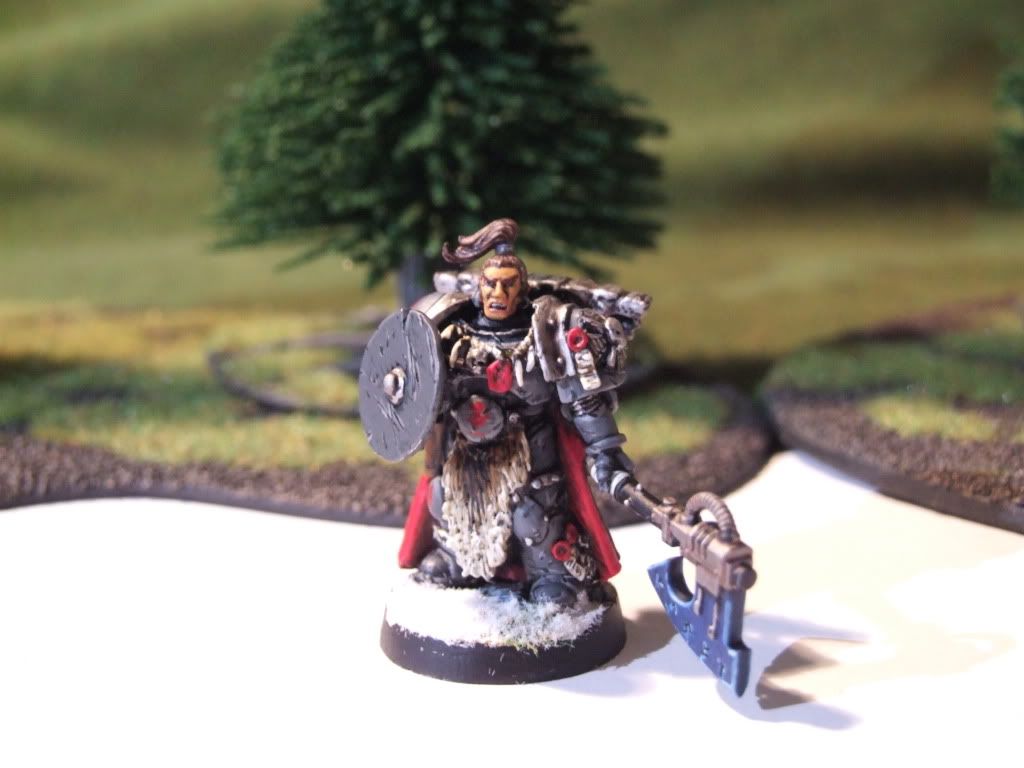
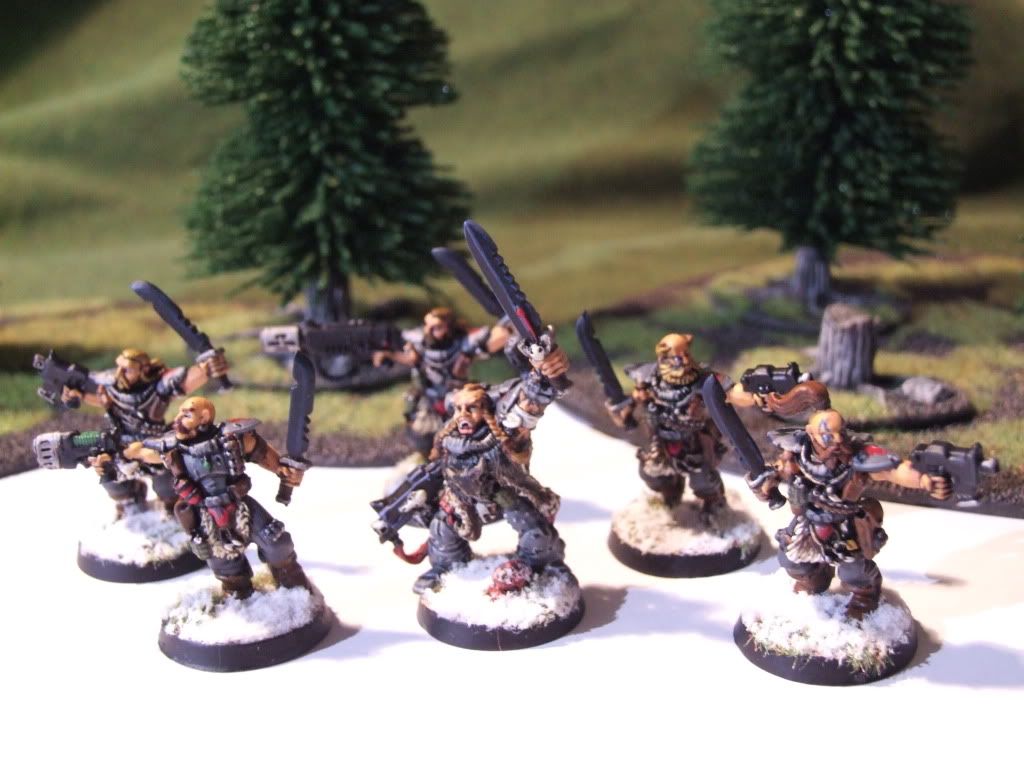
Here's my commander (and alterego of the last fifteen years - Durfast Spiritwolf) and some Wolf Scouts


It was a great event as always with Maelstrom Games providing many advantages over WHW - not least on security of toys. I still missed the old venue, but the management of GW seem intent on tearing their business apart. Despite the strong emotions some have towards them, I think that GW have been an asset to the hobby, not least in attracting many new players and developing some talented sculptors. Hey ho!

Anyway, back to work (and the dissertation) before I can treat myself to dipping brush in paint again later tonight ;-)

Thursday, 5 May 2011

Cold turkey

School boy error no. 1 - not taking a piccy of nice shiny HYW men-at-arms before leaving  home and e-mailing them in for the LPL round 9.

School boy error no. 2 - leaving painting tray in Blighty during first phase of move to Denmark because 'it was only for a week and herself had priority in any space in the car as she was staying here'. So, in addition to withdrawal symptoms, now have only two nights to finish off round 10's entry.

School boy error no. 3 - there is no number three (apologies to Monty Python).

School boy error no. 4 - bringing so many wargames magazines with me that I can successfully procrastinate during the time I should be working on my dissertation.

School boy error no. 5 - oh and start a blog to provide even more options for procrastination.

School boy error no. 6 - and then there is t'internet in general.

School boy error no. 7 - and several wargames forums in particular...

Sunday, 1 May 2011

Stand by Vikings - it's payback time!

I'm now safely ensconced in Aarhus, Denmark and for your delight and entertainment - Sir John Cornwall and friends:

Thursday, 28 April 2011

crusader serjeants

Guy de Lusignan’s serjeants

A formation of serjeants in the pay of Guy de Lusignan, king consort of Jerusalem, led by one of his household knights.
Guy was the one who suffered the major character assassination in Kingdom of Heaven and was, in my opinion, a pretty good egg.

On 4th October 1189 he faced Saladin in battle once more – this time on the plains of Acre. The battle was a one-all draw tactically, but in forcing Saladin to withdraw, he achieved a position of strategic advantage (I’ll save you too much more detail).

Anyway, whilst Guy was leading the reserve to pull his assault force’s arse out of the fire (including saving the life of his archrival Conrad of Montferrat). The garrison of Acre sallied forth to try and take his camp. Not all was lost, however, as Guy had left his brother, Geoffrey and James d’Avesnes with a strong force of infantry to hold it. In meantime, Guy coming galloping back and helps to drive them Muslims away – hurrah!

These serjeants are dressed in the house colours of the Lusignan family and the knight wears Guy’s personal heraldry, as was the norm in the late 12th century.