Showing posts with label Third Crusade. Show all posts

Monday, 18 November 2013

Horisont V - Kingdom of Heaven

Fresh from a couple of days gaming at Horisont V with some photos of the Third Crusade game I hosted. Each army came in around 2750 points with two to three players aside.

First the Ayyubids. Two big units of Syrian halqa, two units of arab infantry (half with bows), two units of Turcoman light horse, some Mamluk cavalry and a gaggle of skirmishers - all Musketeer Miniatures, painted by Howard Gray (oblivion@cix.co.uk), and based by me:

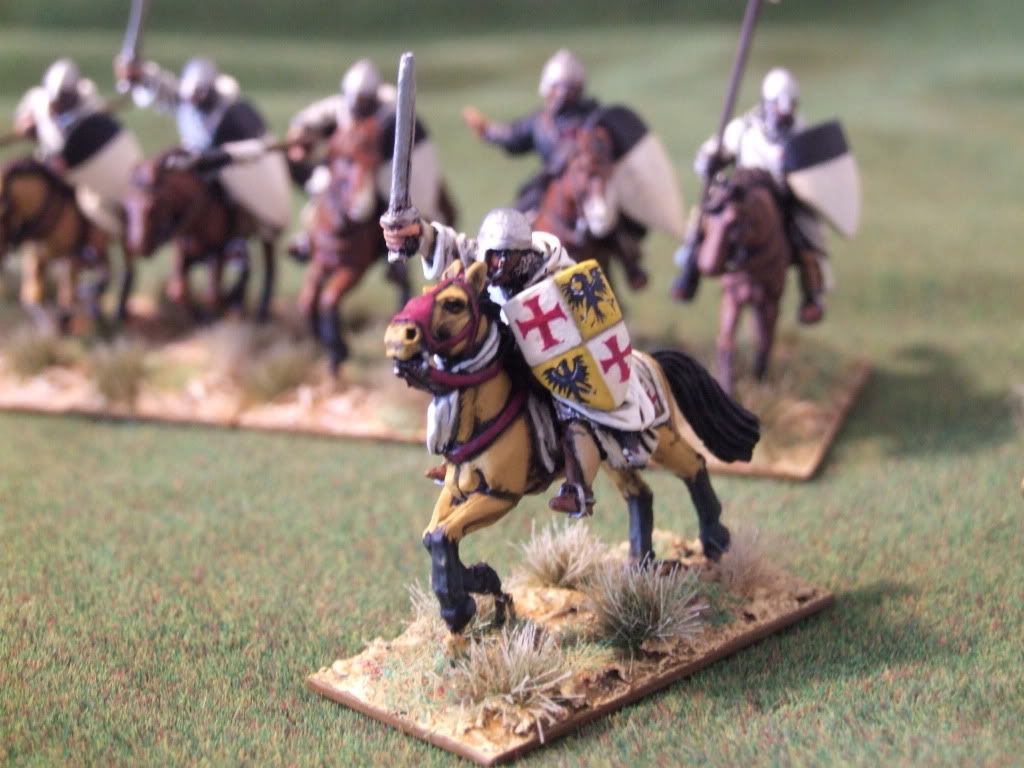
Then the Third Crusaders. two units of MO knights, and another of Crusader (mounted) knights, with dismounted crusaders, some mercenary Italian crossbowmen and allied Kingdom of Jerusalem foot (half with crossbows) - all Perry Miniatures, painted and based by me:


Mostly positive response with only one announcing the rules/lists were broke after his Syrian halqa received take a right kicking off some Templars and then get cut down when they eventually broke!

So obviously it's something we'll have to address in a future errata - or not :-)))


To be fair, the Ayyubids are not an easy army to play. Even for experienced players they may present a bit of a challenge. I'd planned on a 8x4, but ended up on a shorter board, which didn't help. These guys certainly need the space.

Anyway, looks like we'll be doing a re-run at Aalborg sometime soon and maybe another location yet to be confirmed ;-)


Tuesday, 14 May 2013

Third Crusade - again

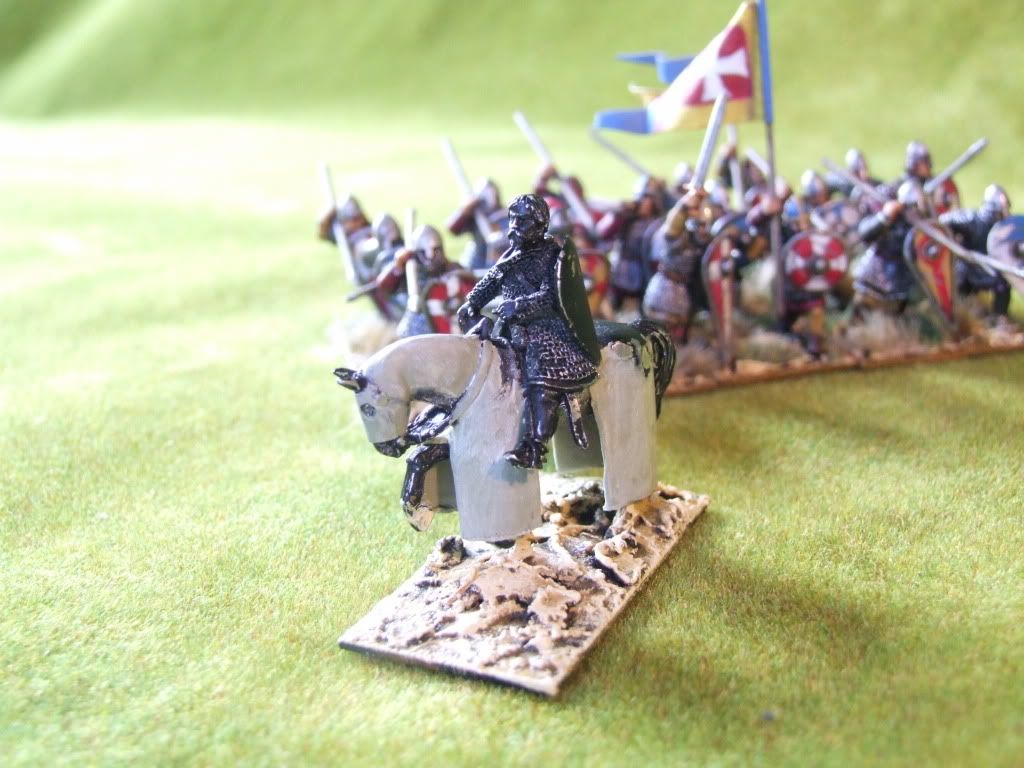
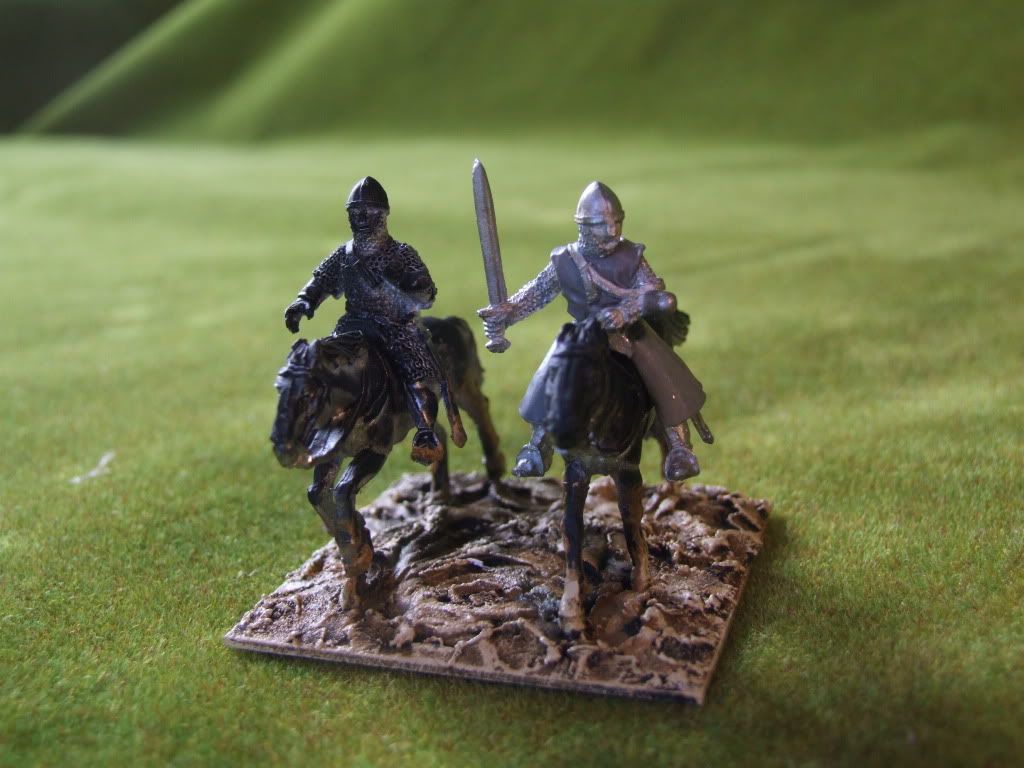
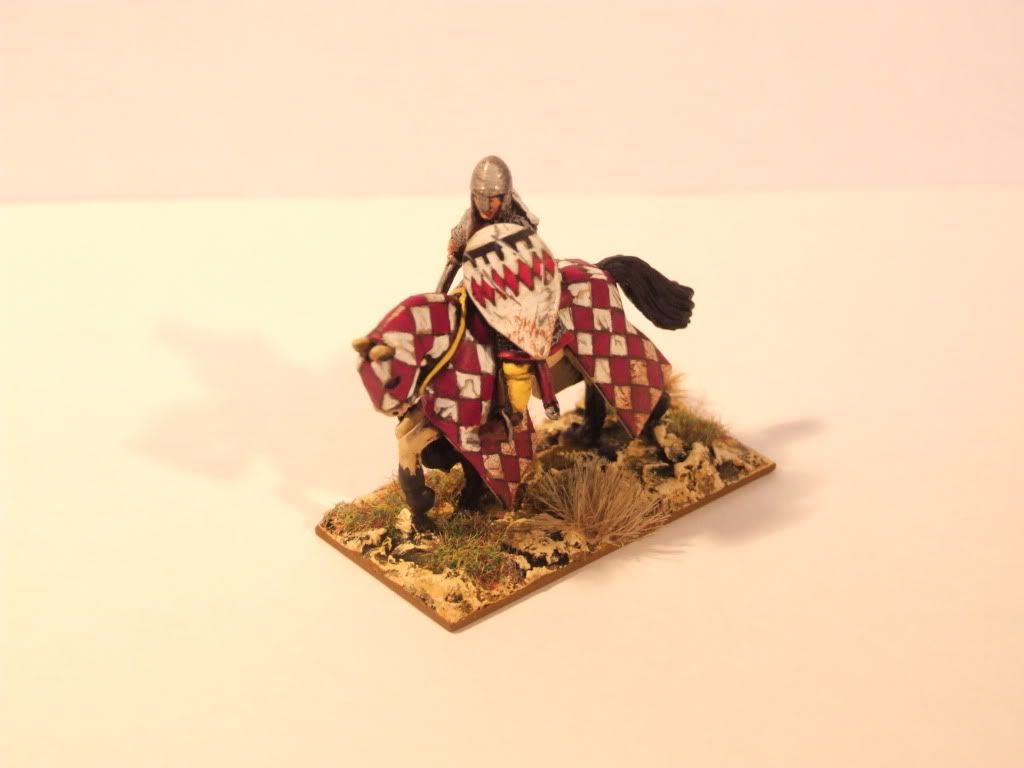
With Kingdom of Heaven supplement for Clash of Empires in final draft and planned for a Summer release and freshly back from talking medieval at Kalamazoo, I can feel the need to dust off my crusaders. Some more foot seems a must as the Hospitaller crossbowmen need some protection. Having made some progress on the identity of the Hospitaller marshal and what was going on at Arsuf, means a mounted figure painted up as Baldwin de Carron is a certainty. If only I can decide how he might combine personal with household heraldry...

But first, I really must finish off those pesky Death Guard.

Sunday, 27 November 2011

.. and the rest

With the standard completed I can now show the finished unit in all its glory:

Ten knights of Richard I’s household in Palestine c. 1191. Following-on from the information given on the heraldry of the royal liveried knight/serjeant and Roger de Harcourt, the unit is led by Stephen of Thornham (Turnham), royal marshal and brother to Robert, justiciar of the royal fleet and, then Cyprus. Due to Howden’s translation of his name into Latin (Stephanus de Toronis) being the same as Stephen de Tours, royal steward and former seneschal of Anjou, there has been some confusion as to whether they were one and the same chap. By studying witness lists in various charters, it can be established that they were clearly two separate characters – both of whom were with Richard in the Holy Land. I've taken a different approach to Stephen's caparison and inserted the same heraldry as the shield on a blue background - this is to compliment the heraldry I had chosen for Richard's household, which can be seen on the musician behind him (such as might be expected by a senior official of the royal household).

The standard is carried by Peter des Préaux, who is described as replacing Robert Trussebot for that task. To his right is his eldest brother John, lord of Préaux, and to his rear another brother and also a royal steward, Roger. As steward, Roger is keeping close eye on the trumpeter to ensure he follows the direction of the marshal. All three bear the heraldry of the des Préaux family - a gold eagle on a red background. A fourth brother, William des Préaux, gave himself up to the Muslims during a skirmish in September 1191 to allow the king to escape. One of Richard’s last acts in Palestine was to buy William’s freedom. The final brother, Engleraw, remained in the West as part of Prince John’s household. Finally, to the rear right is Gilbert Talbot, who was rewarded with the custodianship of the royal castle of Ludlow following his service with Richard in the Levant.

Andrew de Chauvigny


Andrew de Chauvigny, cousin to Richard I and overseer of the regulations for the Third Crusade written in Messina in October 1190. He was given the hand of Denise, countess of Devon, daughter and heiress of Ralph VII de Deols by Richard I and married by bishop of Rochester in August 1189.


Andrew wasn’t the luckiest of chaps, he was unhorsed by William Marshall and severely broke his arm when Henry II's rearguard clashed with Count Richard's vanguard outside Le Mans in 1189. Then he broke it again whilst rescuing the earl of Leicester in Palestine in December 1191. However, he was certainly brave. His standard was one of the first raised above the walls of Darum during King Richard I's assault (22 May 1192) and he participated in repulse of Mamluk counter attack at Jaffa - one of only 10 with a horse (August 1192). Finally, in terms of the Third Crusade, he was the commander of first party of pilgrims to Jerusalem.

Rather than replicate the arms of his shield on the caparison, I have chosen to just use the red diamond symbol, which would be easy to distinguish on the battlefield and in line with representations of other caparisons from the period.

Monday, 14 November 2011

Nearly Done

Still some tufts to add to the bases and gloss varnish for the armour:

Richard I


Richard's arms are based on his first royal seal showing the two lions of the duchies of Normandy and Poitou, which changed to the more familiar three lions (the third probably representing Aquitaine) towards the end of his reign and after his return form crusade.

Roger de Harcourt, household knight and companion to Richard I, and a royal serjeant


Roger wears the family heraldry (at this time heraldry was more a family than individual thing) and the serjeant carries a shield bearing a white cross (as agreed in Jan 1189 with King Philip II and the count of Flanders) superimposed with Richard's probable royal arms (see above).

Wednesday, 31 August 2011

Fancy some Danish?


Next batch of crusaders:


Again these are from Perry Minis 28mm First Crusade range and represent a unit of Danish crusaders c. 1189. About 2,000 Danes and Frisians beached their fleet at Acre and marched almost immediately into battle under James de Avesnes – a hero of the tournament circuit who they had elected as their commander.


The unit commander, his standard bearer, hornblower and bodyguard (on the central stand of four figures) wear the colours of the royal house of Estridsen (Blue and Yellow). Although King Canute VI wasn’t on the Third Crusade, the size of the contingent and the lack of detail on Danish noble participation, led me to assume at least one knight of the royal household would have gone along.


The standard includes the Dannebrog (national flag of Denmark) on a field of Estridsen colours. Popular history tells of the Danneborg falling from the heavens during either during the battle of Lyndanisse (1219) or Fellin (1208), but it only appears in historical narratives of the 16th Century and some have suggested that it came from the strong Hospitaller presence in Denmark. However, a Danish crusader historian has suggested (over a few glasses of Carlsberg!) that the Dannebrog was based on a Papal banner given by Eugenius III at the time of the Second Crusade for the campaign against the Wends. So here it is – on the Third Crusade, but not yet in its modern form with similar schemes repeated on several shields. Flag and shields handed painted as usual.


Some titillation for the next batch (with a huge thanks to Soapy for doing the conversion work):

King Richard the Lionheart


and a couple of his household knights


Sunday, 26 June 2011

Hospitallers...


The Order of Hospitallers was founded in the 11th century and recognized by Pope Paschal II in 1116.[1] Headquartered in the great hospital in Jerusalem, its original object was to provide aid and relief for pilgrims to the Holy Places. However, Raymond du Puy (master, 1119–24) permitted the Order to undertake military activities and these soon began to take precedence over the charitable work from which it took its name.[2] When Jerusalem was surrendered to Saladin in 1187 the hospital was lost and the Order became completely military. Its headquarters remained in the Holy Land and was established in Acre after its capture by the Third Crusade in 1191. There is stayed until Acre fell to the Mamluks some hundred years later.

Before being made the 9th Master of the Order, Garnier had been Prior of England (C. 1184-1190) and travelled to the Holy Land with King Richard I and Robert de Sablé (future Grand Master of the Templars).[3]

Here we see the Order in action at the battle of Arsuf on 7 Sep 1191. Despite having asked Richard several times and been denied permission to charge the enemy to relieve the pressure on the rearguard, sources relate that the Hospitallers finally launch themselves through their infantry shield. Here Garnier vainly tries to restrain his Marshall as he leads the Hospitallers out against the enemy.


As with the Templars, the rule of the Hospitallers made the Marshal the commander of the Order in the field and he also acted as standard-bearer with the Standard Bearer actually commanding the serjeants once the Marshal had taken the flag. To the Marshal’s rear is a brother-serjeant who is dressed in the brown habit of his rank and is sounding the charge.


[1] Delaville le Roulx, Cartulaire Generale des Hospitalliers, i. 29.
[2] See letter (1178–80) from Alexander III to Roger des Moulins: Cartulaire, i. 360. For Raymond's Rule see ibid. i. 62.
[3] Cartulaire, iv, 321–7, 329.

Tuesday, 14 June 2011

Talk about déjà vu

Back in UK for a bit and back on the crusaders - should have some hospitallers for you shortly...

Thursday, 28 April 2011

crusader serjeants

Guy de Lusignan’s serjeants

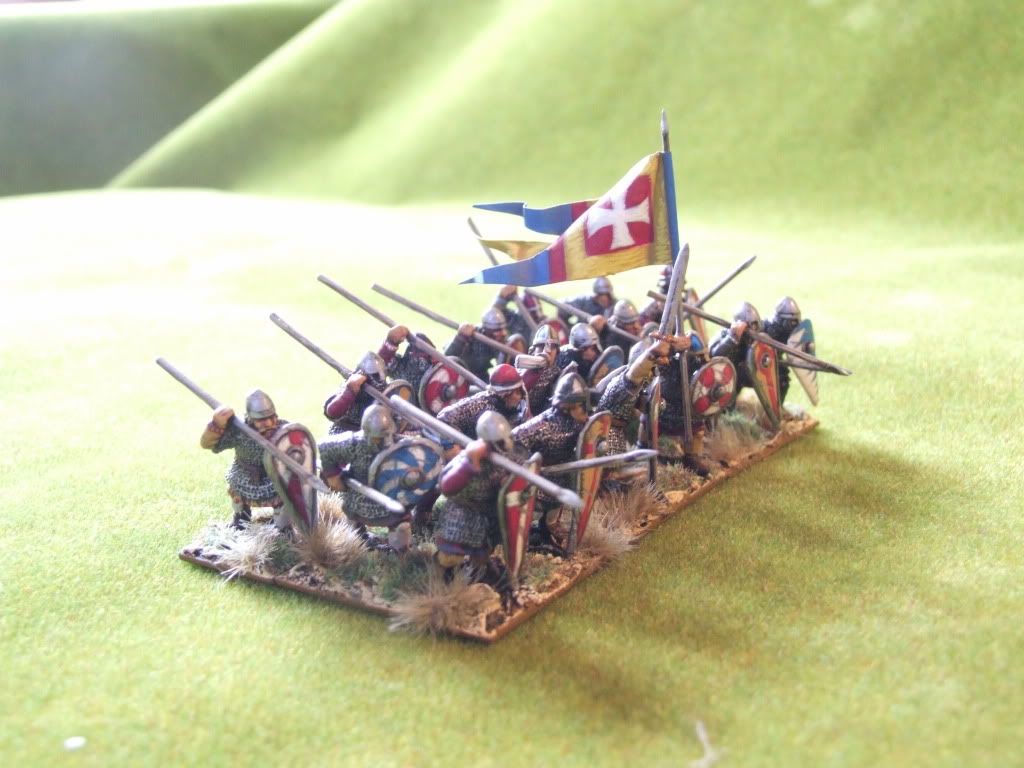
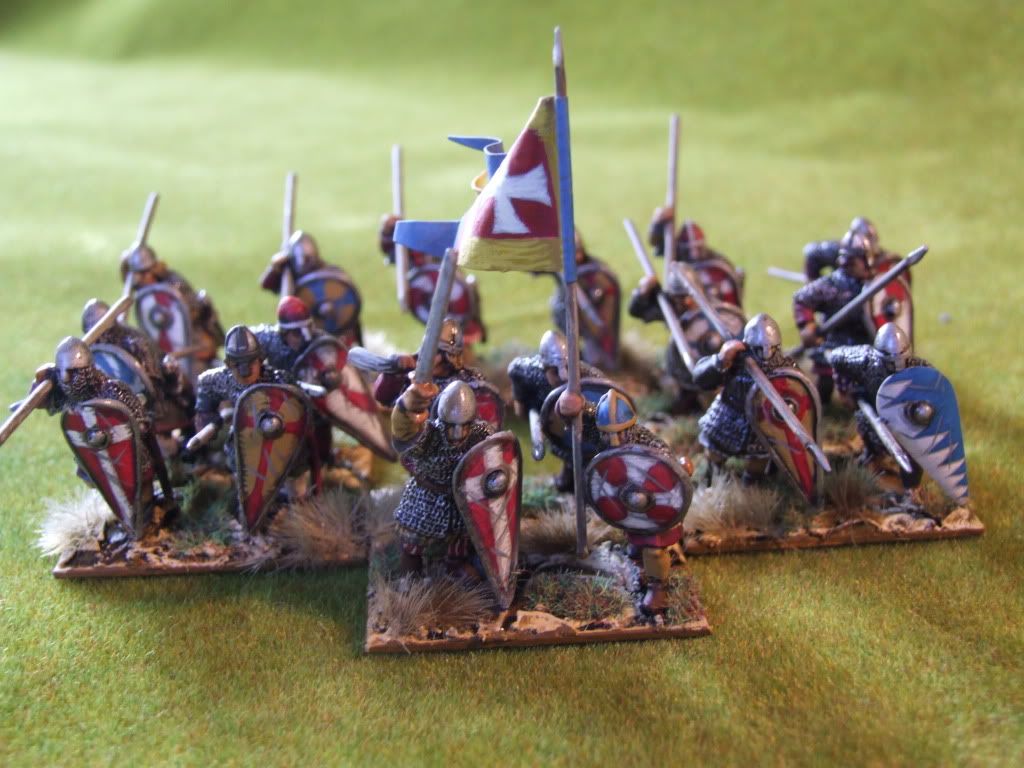
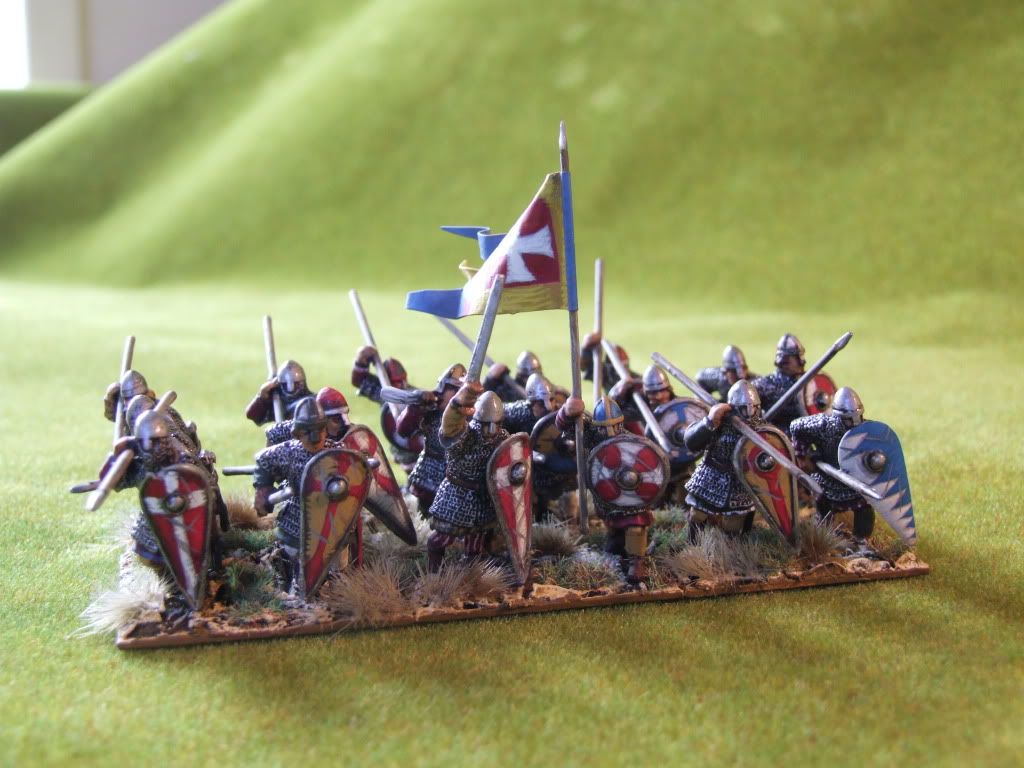
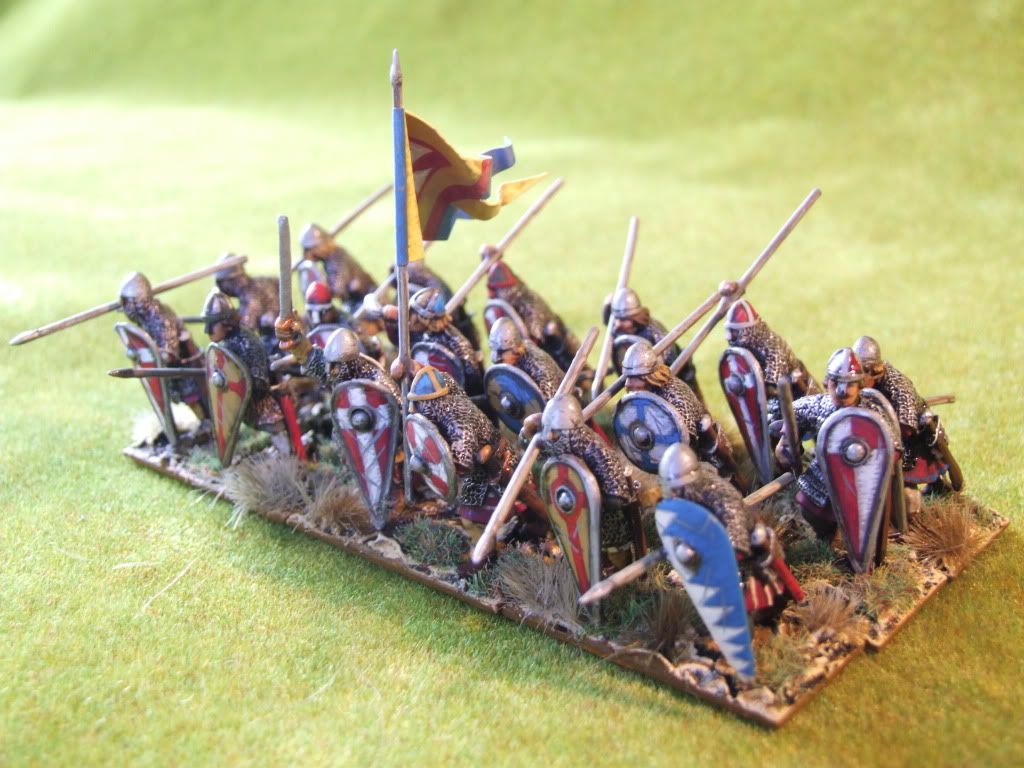
A formation of serjeants in the pay of Guy de Lusignan, king consort of Jerusalem, led by one of his household knights.
Guy was the one who suffered the major character assassination in Kingdom of Heaven and was, in my opinion, a pretty good egg.

On 4th October 1189 he faced Saladin in battle once more – this time on the plains of Acre. The battle was a one-all draw tactically, but in forcing Saladin to withdraw, he achieved a position of strategic advantage (I’ll save you too much more detail).

Anyway, whilst Guy was leading the reserve to pull his assault force’s arse out of the fire (including saving the life of his archrival Conrad of Montferrat). The garrison of Acre sallied forth to try and take his camp. Not all was lost, however, as Guy had left his brother, Geoffrey and James d’Avesnes with a strong force of infantry to hold it. In meantime, Guy coming galloping back and helps to drive them Muslims away – hurrah!

These serjeants are dressed in the house colours of the Lusignan family and the knight wears Guy’s personal heraldry, as was the norm in the late 12th century.


Saturday, 23 April 2011

Back in the saddle!

If I don't start this now, then I probably wont get around to it again for another several weeks. So, despute the fact that I should be:

Finishing off a taxing paper on the battle of Acre

Painting up the entries for the last two weeks for the Lead Painters League (HYW)

Finishing off the unit of Serjeants for the Guild 2011 build (Third Crusade)

Preparing for a move to Denmark (next Friday)

Oh - go shopping has just been added to that list and is working its way energetically to the top

I am trying to bump start this blog. So to save further ado, here are some photos of my two major projects on the go at the moment:


HYW:

Boucicault's MAA (above) and crossbowmen (below)

earl of Suffolk's retinue making some last minute preparations
Sir Gilbert Umfraville's retinue fends off the Frenchies
Third Crusades:
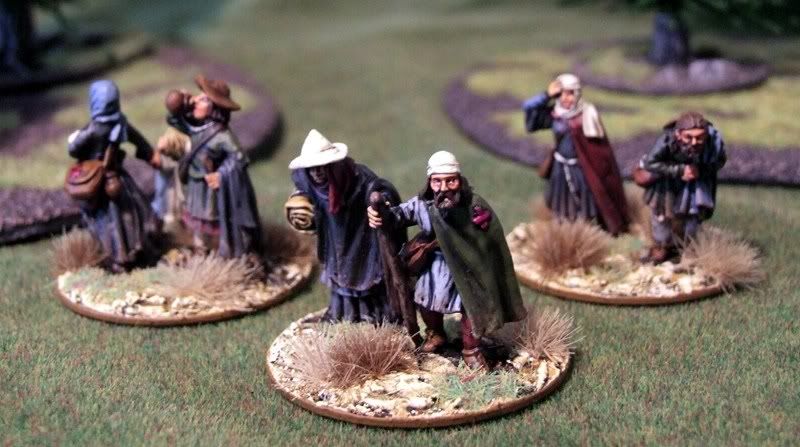
pilgrims
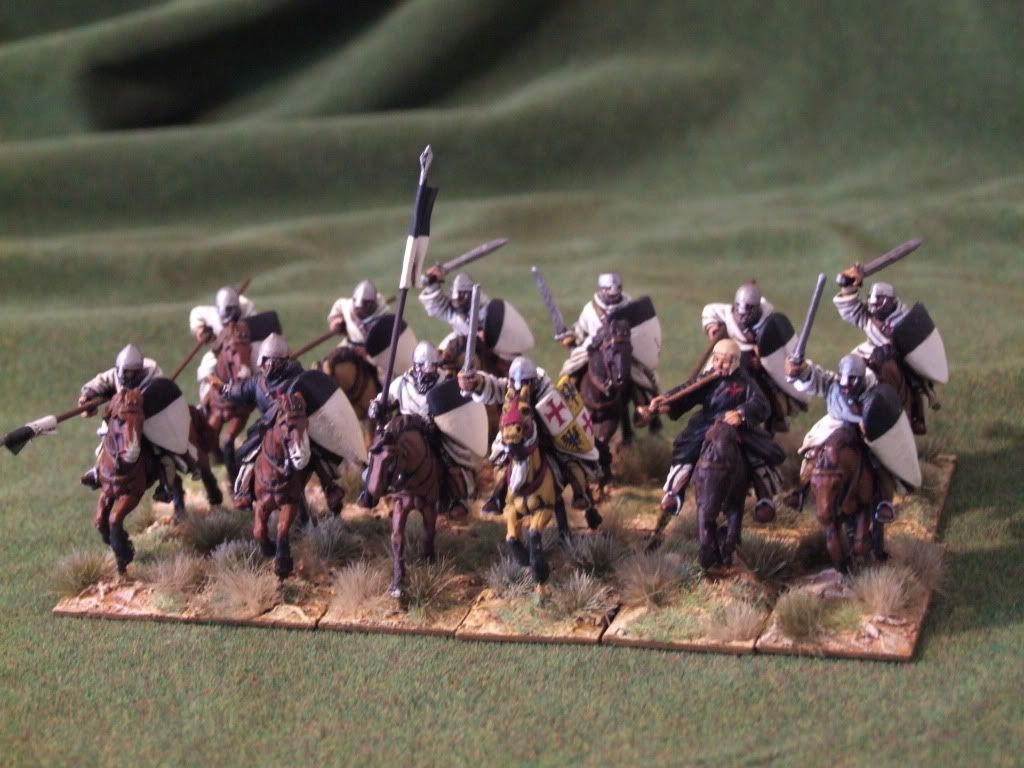
a conroi of Templars
Richard de Sablé, Master of the Templars